راهنماي گردشگري خوزستان
راهنما راننده تخصصی گردشگری استان خوزستان


Susa (Shoosh)
The township of Shoosh is located to the northwest of the province, and has common borders with the Ilam province. Its center is the city of Shoosh which is at a distance of 1,010 km. from Tehran. It experiences a hot climate. Susa is considered to be one of the oldest centers of civilization throughout the globe. In archeological excavations, relics related to the pre-historic era have been discovered here. The Elamites were the first clans who were responsible for its flourishment.
During this reign Susa was proclaimed as a capital. Even after the Achaemenians gained control over Susa, the latter sustained its splendor and was selected as the winter capital by Dariush the Achaemenide. Till the beginning of the control by the moslems, Shoosh continued to thrive. In the year 1898 AD, the famous castle of Shoosh was constructed by "Morgan" on the northern part of the Acropol hill. The ancient name of Shoosh was 'Soos' or 'Dasht-e-Soosiana', and later on was changed to Shoosh.
Danial-e-Nabi Mausoleum, Shoosh:
The same is located on the eastern banks of the Shaoor River. This mausoleum is the resting abode of one of the prophets of the Israelites. The premises has two courtyards, which are surrounded with chambers and porches. The mausoleum is located at the end of the second courtyard, which has rooms in three side of courtyard for a nights stay of pilgrims.
In this mausoleum, the sepulchre below the tomb is an old yellow colored stone devoid of any inscriptions. The ceiling of the mausoleum has beautiful mirror works with light apertures on eight sides under the dome. The foundations of the mausoleum are old but thick and strong. The upper section of eastern side of mausoleum is adorned with tile works. The dome of Danial-e-Nabi is a multi-sided, hexagonal in shape erected on a circular base.
Acropol (Shoosh) Castle, Shoosh:
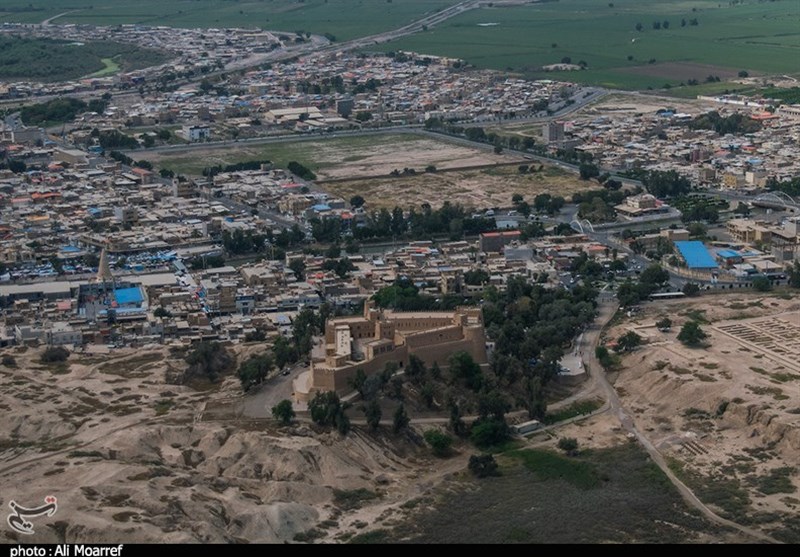
The Acropol or Shoosh castle was constructed by a group of French archeologists in the year 1897 AD in the highest region of the city. The same is very similar to the Bastille in France. This castle has been constructed by Dezful artists and by means of bricks obtained from Darius (Dariush) castle and some engraved bricks in the Kific script from Choqazanbil. This castle was in the hands of the French authorities before the Islamic revolution, after which it was utilised as the archeological center of Shoosh.
Valuable and important relics such as the famous statue of Queen Napirasustoon, Hamurabi Code and famed buff earthenware glass of Shoosh with a wild goat drawing have been discovered from the Acropol Hill. It took a period of 15 years to build this structure which stood as a defense fort against the attack of local clans and tribes. During Iran-Iraq war this castle was under the bombardment of Iraqi troops, and later on came under re-construction and repair.
Apadana (Dariush) Palace, Shoosh:
This palace was constructed by the order of Darius (Dariush) the Achaemenian on the top of Elamite hillocks and is knwon as Dariush (Apadana) palace. The walls of the palace are made of sun baked bricks with a brick worked facade, and the pillars are of stone. Apadana Palace consists of a pavillion, haramsara (a section for court ladies), gateway, entertainment hall and three central courtyards. The internal walls of the palace are adorned with engraved glazed bricks depicting the winged-lion guard solidiers and adorned by lotus flowers, the remnants of which are on display in local museums and those in abroad. A major portion of this palace caught on fire during the reign of Ardeshir I, (461 BC), and finally during the conquests of Alexander, the said palace along with other Achaemenian palaces were completely ruined.

Shaoor (Ardeshir) Palace, Shoosh:
The remnants of this palace is situated along the western banks of the Shaoor River, opposite the mausoleum of the Prophet Danial (PBUH). This palace has a square shaped hall with lateral installations. The columns or pillars are made of stone, and its walls are of sun baked bricks. This palace was constructed during the reign of Ardeshir II , and was used as his residential palace as well as a seat of power.
Shoosh Hills (Shahr-e-Shahi), Shoosh:
The eastern vicinity of the Shoosh hillocks are known as Shahr-e-Shahi. Numerous relics have been discovered here, relative to the Elamite, Achaemenian, Parthian and Sassanide periods. Besides which the remnants of roads, passages and dwellings have also been discovered here. The discovered relics, instruments, tools and skulls reveals that the native inhabitants of this territory before migration of the Aryans had been scattered and dwelled in southern and central territories of Iran and established the Elamite rules and governments. The method of constructions, burial of dead bodies, placing a stove in the center of room,etc., are examples of general life-style and other rituals of these people.
Shoosh Museum:
The Shoosh Museum is situated amidst a garden near the ancient Shoosh Castle, and opposite the Danial-e-Nabi Mausoleum. The construction of this museum coincided with the excavations at Shoosh. Thereby the bricks discovered there and in Choqazanbil were utilized in construction of this building. Some other part have been also added to the museum in the following years. The museum was inaugurated in the year 1966 and displays remnants from the pre-Elamite to the Islamic period. The Shoosh Museum has six exhibition halls in which all the vestiges discovered during excavations made in Shoosh and Choqazanbil are on display.

Choqazanbil Temple (Ziggurat), Shoosh:
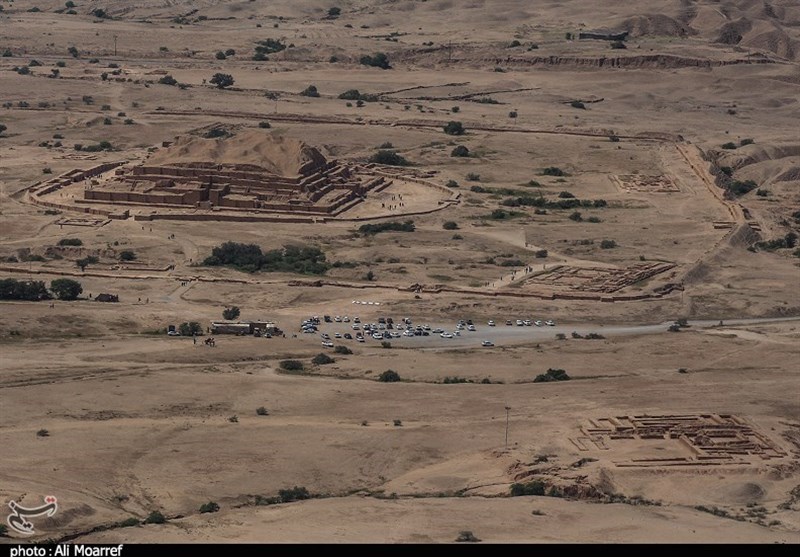
Choqazanbil is situated at a distance of 35 km. south east of Shoosh, and is the only remnant of an ancient city, that was constructed approximately in 1250 BC. This city which was at the vicinity of 1 km. from Dez river, was known as "Ontash gal". The same is a reminder of the new Elamite civilization. It was surrounded by three interconnected sun brick made ramparts with the main entrance situated in the eastern side of the largest rampart.The palaces and tombs of the Elamite monarchs are situated between the first and second ramparts. Between the second and the third ramparts, the remnants of the water supply and purification system for city is observed. The water purification system of Choqazanbil was to provide drinking water for citizens which is obviously accounted as one of the most ancient water supply systems. In the center of the third rampart, the main temple (Ziggurat) is placed. This square shaped structure is constructed at the dimensions of 105*105 sq.m., along four main directions.This temple was constructed by means of millions of bricks, in five floors. At present only two floors have been remained. Except for the first and fifth floors, the rest have been filled with sun baked bricks. The fifth floor which is considered to be the most highest one, was used to be the place where idols were kept., The main idol was called "Inshushinak" which was considered to be the most famous deity of Shoosh city. On the brick walls of the temple, same inscriptions designating the name of the king in the Cuneiform script can be observed which reveals the aim of the monarch in the construction of this temple. Near the temple, on the main ground there are two circular platforms. Some believe this to be a place where sacrifices were carried out, and the other version is that, this was an area for astrology.The aggregate of this city along with Elamite civilisation in the vicinity of Haft Tappeh, was demolished in 640 BC as a result of Assyrian conquests, under the command of 'Ashour Banipal', thence terminating the Elamite jurisdiction after a period of more than a millennium.