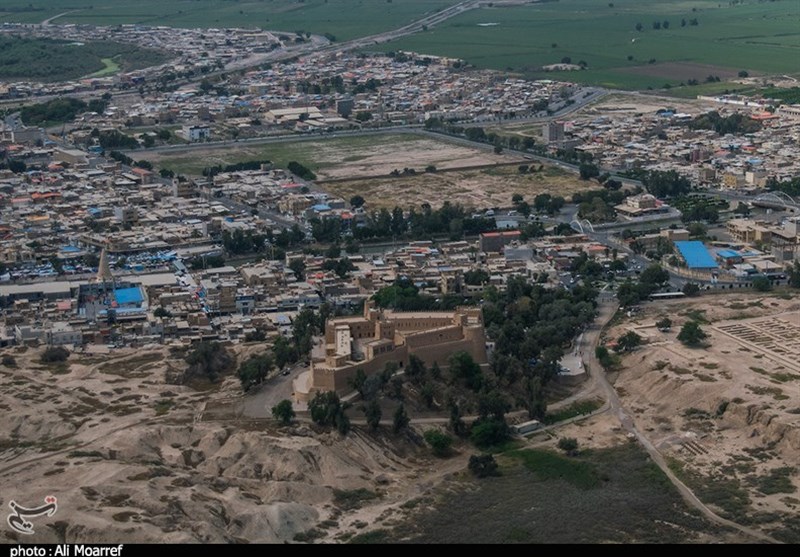
Susa
شوش
By pouya monsefi
By pouya monsefi
City of SUSA , The Oldest City on the World's
شهر باستانی شوش ، در استان خوزستان ، کهن ترین زیستگاه بشر و
یکی از اولین نقاط شهر نشینی انسان در جهان است
Ancient city of Susa, the world's oldest human habitats and
one of the first human space urbanization
in south western Iran
"Susa, the ancient Persian word meaning is "Good
The one of very old civilization which has ever lived in world was The SUSA Civilization
7000years ago, there was a civilization which lived in today's Khoozestan, their name was "Shoosh Civilization," or in English "Susa Civilization." So far this has been reported as the oldest civilization which have ever existed on Earth. By civilization, we mean civilized city government or city state or Empire or Kingdom or any type of local civilized system. The ancient city of Susa is mentioned in Old Testament as the place where prophet Daniel lived. The city name is derived from Shashana, a member of water lily family of flowers, believed to grow in lakes and swamps outside this biblical city in ancient times.
Susa was the capital of a ancient kingdom know is old Elam city. A kingdom built and ruled by Dravidian people who ruled it from second millennium BCE until late mid-first millennium BCE. Elamite kingdom was destroyed by attacks from Babylonians. Elamite influence spread throughout the southern regions of Iran by their cuneiform writing system, and rock inscriptions. After that Cyrus the Great founded his empire and gained control over Susa. Susa was declared as one of the three capitals of the empire covering the southern regions. When Darius established his rule over the empire, he set out to built the palace of Persepolis in his home state, and later an equally magnificent palace in his favorite city of Susa. It is said that the carving style and shapes of the columns in Susa are similar to Persepolis buildings. The fluted shaped column with flowers at pillars are truly an Achaemenian style in ancient palace buildings. Today we can visit the ruins of this palace built on a hilltop overlooking the modern city of Susa
This style was later used in ancient palaces as far as northern India all the way to Ionian Greece.
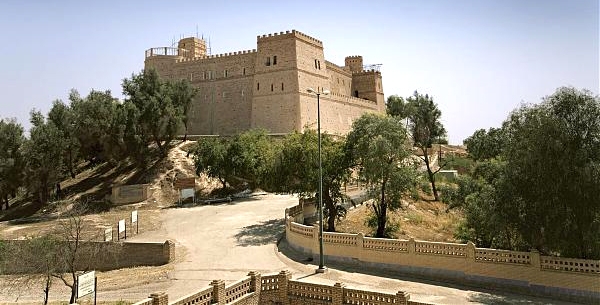
Till the beginning of the control by the moslems, Shoosh continued to thrive. In the year 1898 AD, the famous castle of Shoosh was constructed by "Morgan" on the northern part of the Acropol hill. The ancient name of Shoosh was 'Soos' or 'Dasht-e-Soosiana', and later on was changed to Shoosh. The tomb of Profet Daniel is also located in Shooshtar and it can be seen on the western side of the palace hill.
One of the most beuatiful castles in Shooshtar is the Acropol or Shoosh castle which was constructed by a group of French archeologists in the year 1897 AD in the highest region of the city. The design is very similar to the Bastille in France. This castle has been constructed by Dezful artists and by means of bricks obtained from Darius (Dariush) castle and some engraved bricks in the Kific script from Choqazanbil. Valuable and important relics such as the famous statue of Queen Napirasustoon, Hamurabi Code and famed buff earthenware glass of Shoosh with a wild goat drawing have been discovered from the Acropol Hill. It took a period of 15 years to build this structure which stood as a defense fort against the attack of local clans and tribes.
Susa (Sousa) is an ancient city that one hundred and fifty kilometers East of the Tigris River in Khuzestan Province during the Elamite Empire, Achaemenid and Ashkani is located. Susa, one of the oldest known settlements in the world, probably in 4000 BC were established, although one of the first residential village in
about 8000 BC are Land of Elam at the time of great king of ancient people called this "maybe she Gal" politician and his wife "Queen Napyrasva" wonderful land that was important was divided into several sections.
. 1Regional and city palaces of Susa. 2. Chgharnbyl area sacred pilgrimage and the great temple that I maybe scabies powerful king to the god of Susa Elam (Ein Shvynak) was presented and currently one of the oldest temples of ancient world. 3. City "doran tash" that besides the holy city was located "choga zanbil" .4 Dam
and town water supply system. 5. Cemetery and the old city of (haft tape ) seven hills.
Elamite king reigned for 100 years in their knowledge and patents issued to the world. Until the great Achaemenid empire was on the job and the city of Susa again became the largest city in Iran Abad.
By : pooya monsefi
Chogha Zanbil
One of the world's oldest temple Pyramid
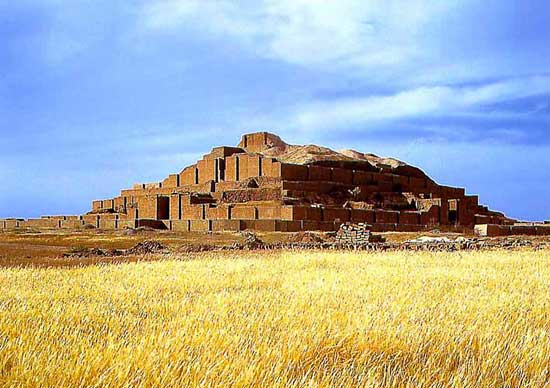
Chogha Zanbil is considered to be the largest man made structure in Iran. Its size and splendor were both intended to manifest the power of King Untash Napirisha. The ziggurat of Chogha Zanbil is the best surviving example of the Elamite architecture in the world and is registered with UNESCO. However, it was unfortunately lost to the world for approximately 2500 years, until it was accidentally discovered in 1935.
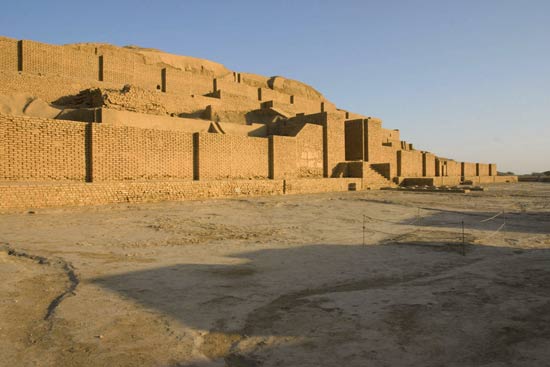
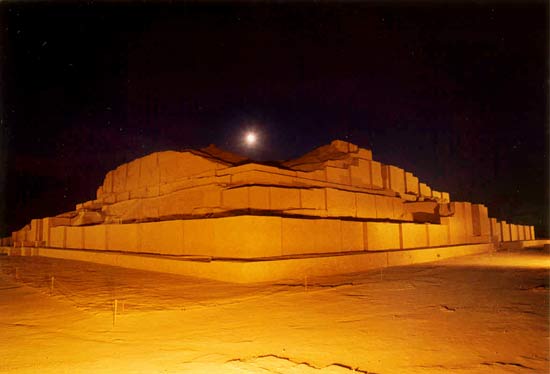
The well-preserved ziggurat was built at Dur Untashi, a city near Shush (Susa), by Untash-gal, Kind of Elam, 1250 BC. It served as both a temple and a tomb, comprised of five towers of varying heights, each uniquely constructed inside the other. It is believed to be the largest ziggurat discovered in the region of Iran and Mesopotamia with a base of 105 meters square. It is part of a complex system that includes an outer wall 1200 x 800 meters, which is constructed around a sacred enclosure approximately 400 meters square. The enclosure held three temples, paved courtyards and storehouses. Moreover, remains of three Elamite Palaces have been found nearby, one of which has subterranean tombs.
The building materials in Chogha Zanbil are comprised mainly of mud bricks and baked bricks. The monuments were well built and beautifully decorated with glazed baked bricks, gypsum, ornaments of faience and glass. Thousands of baked bricks bearing inscriptions with Elamite characters were all inscribed by hand, ornamenting the most important buildings. Glazed terracotta statutes such as bulls and winged griffins guarded
the entrances to the Ziggurat.
Chogha Zanbil ,Built by king Untaš-Napiriša (1275-1240) and named after him (Dur Untaš, "city of Untaš-Napiriša"), it measures 105x105 meters and was probably 52 meters high. It was to be the center of a new town, which was to become the king's residence, but was never quite finished. Still, the town survived its builder with more than two centuries, and there must have been people living in Dur Untaš well after 1000, because the Assyrian king Aššurbanipal was to claim in 646 BCE that he had destroyed the town, which
suggests that there must have been something to destroy
Part of facility from chogha zanbil
Four thousand years Dams in Iran
.
The town measured about one square kilometer and was surrounded by a four kilometer wall It was built on high ground, more than fifty meter above the nearby rive Eulaeus (Dez), which made it difficult to bring water to the city. The solution Untaš-Napiriša found, betrays his ambitions: he ordered his people to build a canal to Susa, where fresh water was diverted from the Choaspes river (Karkheh). It passed along Haft Tepe, was diverted into nine branches, and finally reached the town
The town measured about one square kilometer and was surrounded by a four kilometer wall It was built on high ground, more than fifty meter above the nearby rive Eulaeus (Dez), which made it difficult to bring water to the city. The solution Untaš-Napiriša found, betrays his ambitions: he ordered his people to build a canal to Susa, where fresh water was diverted from the Choaspes river (Karkheh). It passed along Haft Tepe, was diverted into nine branches, and finally reached the town
Unfortunately, the water of the Karkheh is full of mud and, because it was downstream from Susa, not very healthy. So it was necessary to clean it before it could be used in Dur Untaš. Therefore, refineries were built in which the water was conducted through several basins. Even by today's standards, this is a remarkable piece of engineering. The refinery that has been excavated, is the is oldest one known monument of this type in the world